
Key takeaways
- Most homeowners policies don't cover flood damage. Flood insurance is a separate policy.
- A new flood policy through the National Flood Insurance Program usually takes 30 days to start, so you can't wait until a storm is in the Gulf.
- NFIP policies cover up to $250,000 for the building and up to $100,000 for your belongings.
- If you're with Citizens Property Insurance and have wind coverage, flood insurance is being phased in. By January 1, 2027, all of those policies will need it.
- Florida sellers now have to tell buyers about past flood claims and FEMA flood help on the property.
A lot of Tampa Bay homeowners learned this the hard way in 2024. Hurricane Helene's storm surge pushed water into homes from the Pinellas beaches to Shore Acres in St. Petersburg, and plenty of those homeowners found out their homeowners policy didn't cover it.
Here's the plain version of how wind and flood coverage split up, and what to check before the next storm.
Wind and water are two different policies
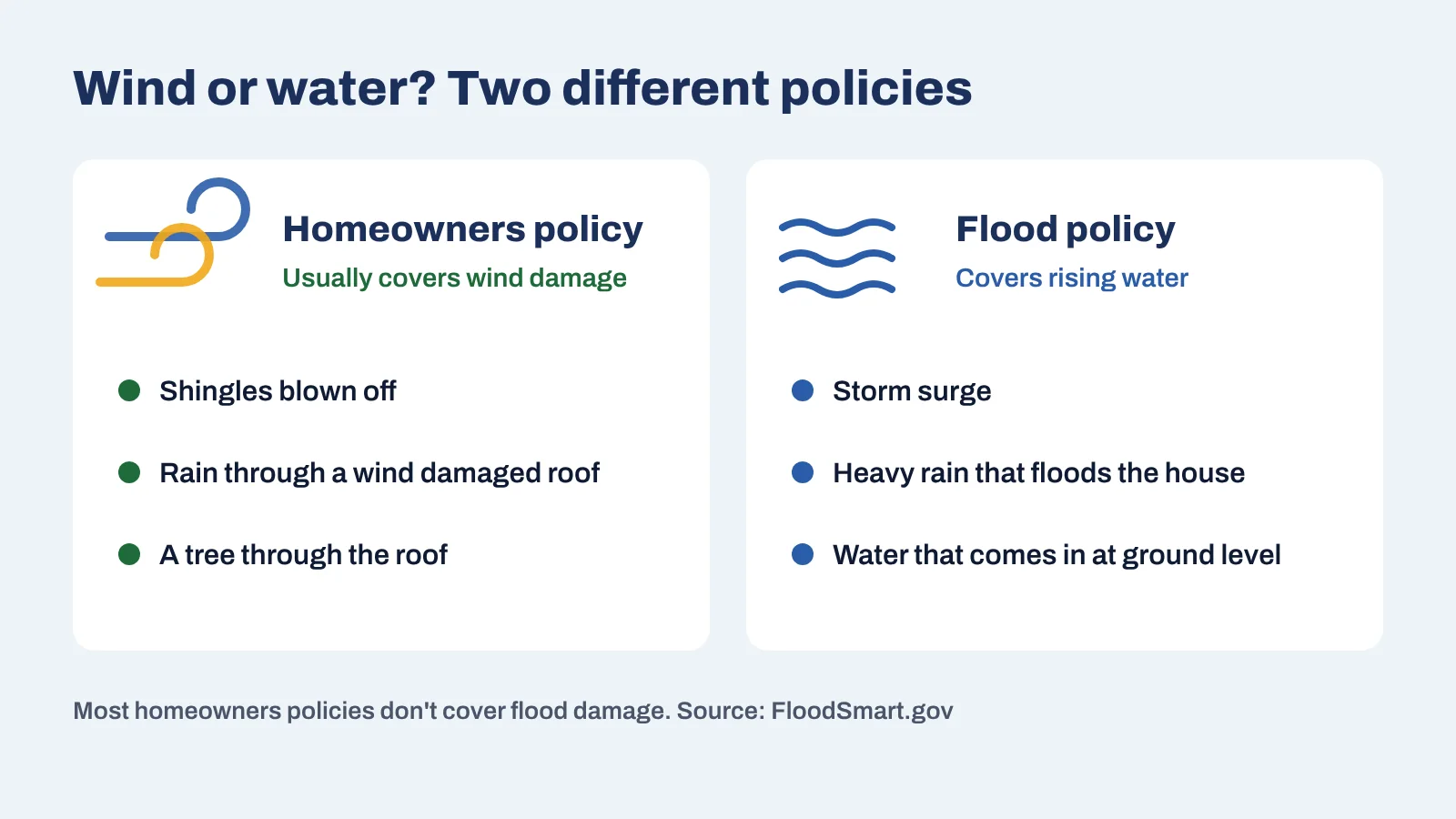
FloodSmart, the federal flood insurance site, puts it simply: most homeowners and renters insurance doesn't cover flood damage. In a hurricane, that line matters. Wind that tears shingles off and lets rain in is usually a homeowners claim. Storm surge or rainwater that rises and comes in at ground level is a flood claim.
Your exact coverage depends on your policy. Pull out your declarations page and look for two things: your hurricane deductible and whether flood is listed anywhere. If you're not sure, call your agent. PITCH Roofing's Florida homeowners insurance guide is a good place to start if the terms are new to you.
How flood insurance works
The 30 day wait
FloodSmart says a new flood policy goes into effect 30 days after you buy it. There are a few exceptions, like buying it when you close on a mortgage. But for most people, buying flood insurance when a storm shows up on the forecast is too late. Hurricane season runs June 1 through November 30, and PITCH Roofing has a quick read on when hurricane season is in Florida.
How much it covers
Through the National Flood Insurance Program, a home can be covered up to $250,000 for the building and up to $100,000 for belongings. You can also buy flood coverage from private insurers. Ask your agent to compare both.
Check your flood zone
FEMA's Flood Map Service Center lets you look up your address. Keep in mind a flood zone isn't the same as an evacuation zone. Our hurricane prep checklist shows how to find your evacuation zone in Hillsborough and Pinellas.
And a lower risk zone doesn't mean no risk. Water doesn't read maps, and Helene proved that across Tampa Bay.
Citizens policyholders: flood insurance is becoming required
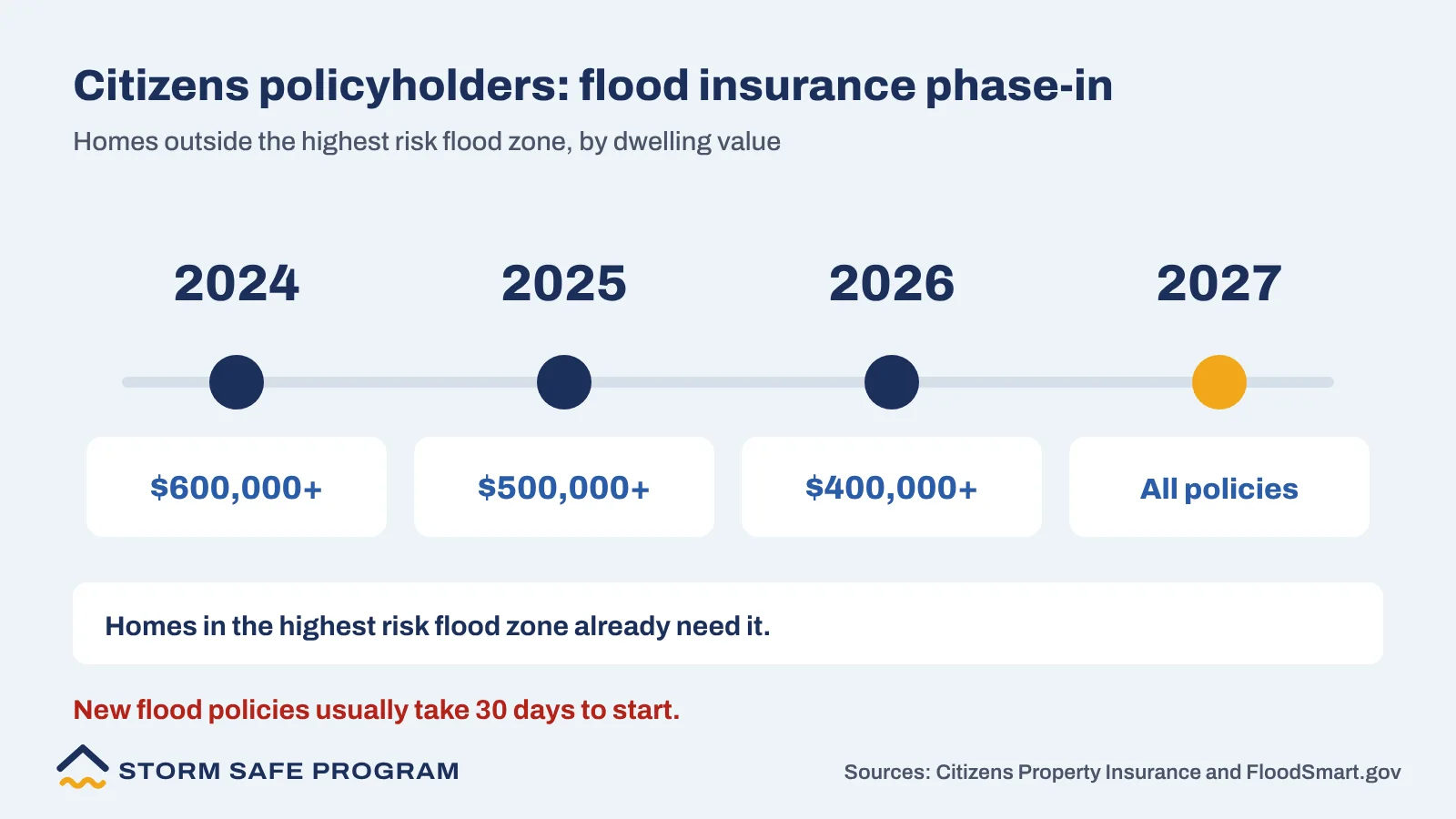
Citizens Property Insurance, the state backed insurer, now requires flood coverage on most personal residential policies that include wind coverage. Homes in the special flood hazard area already need a flood policy. For everyone else, it's phased in by the dwelling value on your policy:
- January 1, 2024: $600,000 or more
- January 1, 2025: $500,000 or more
- January 1, 2026: $400,000 or more
- January 1, 2027: all policies, regardless of value
Citizens says policies that exclude wind and hail don't have to carry flood, and the requirement doesn't apply to condo unit owner or renter content policies. The flood coverage generally has to at least match your Citizens dwelling value, or the most the NFIP will offer you. Check the details for your own policy at citizensfla.com/flood.
Selling someday? Flood history now has to be disclosed
Florida Statute 689.302 requires sellers of residential property to tell buyers whether they've filed a flood damage claim with an insurer, including the NFIP, and whether they've received flood damage help, including from FEMA. If you're buying, read that disclosure closely.
What you can do now
- Find your flood zone on FEMA's map and your evacuation zone on your county's site.
- Read your declarations page and call your agent about flood coverage.
- If you're with Citizens, check which date applies to you.
- Take photos and video of your home and belongings now, before a storm.
- Keep your policy papers in a waterproof bag in your hurricane kit.
A strong roof is still your first defense against the wind and rain that come with every storm. PITCH Roofing explains how to prepare your roof for hurricane season, and our guide to roof age and home insurance covers what insurers look for.
Storm Safe Program is a Florida not for profit that helps homeowners in Hillsborough and Pinellas counties sort through their options to replace older roofs, windows and doors, with no upfront costs in most cases. We don't sell insurance, but a stronger home is a better home to insure. Check who qualifies.
Common questions
Does homeowners insurance cover flooding in Florida?
Usually not. FloodSmart says most homeowners and renters policies don't cover flood damage. You need a separate flood policy.
How long does flood insurance take to start?
A new NFIP policy usually takes effect 30 days after you buy it, with a few exceptions such as buying it at a mortgage closing.
Is storm surge wind or flood damage?
Storm surge is rising water, so it's generally treated as flood damage and covered by a flood policy, not a homeowners policy.
Do Citizens customers have to buy flood insurance?
Most Citizens personal residential policies with wind coverage need flood coverage. It phases in by dwelling value, and by January 1, 2027 it applies to all of them.
See if your home qualifies
Call or text "Safety" to (727) 687-3364, or fill out the form. The assessment is free, with no obligation.