
Key takeaways
- Atlantic hurricane season runs June 1 through November 30.
- Look up your evacuation zone every year. Hillsborough expanded its zones for 2026.
- Sign up for your county's emergency alerts: HCFL Alert in Hillsborough and Alert Pinellas in Pinellas.
- Plan on at least 1 gallon of water per person per day for several days.
- The best time to fix a weak roof, window or door is before the next storm, not after.
Tampa Bay went a long time between direct hits, and a lot of people got comfortable. Then 2024 happened. This checklist is for homeowners in Hillsborough and Pinellas counties who want to be ready before the next one, not scrambling the day before landfall.
What 2024 taught Tampa Bay
Hurricane Helene never made landfall here. It came ashore in Florida's Big Bend as a Category 4. But the National Hurricane Center found that storm surge flooded parts of Tampa Bay with 5 to 7 feet of water above ground. The Clearwater tide gauge set a new record, beating the record set by the March 1993 Superstorm. Twelve people drowned in the surge in Pinellas County.
Less than two weeks later, Hurricane Milton made landfall near Siesta Key on the evening of October 9 as a Category 3, with winds around 115 mph.
The takeaway: you don't need a direct hit to have a very bad day. Water and wind both matter.
1. Know your evacuation zone
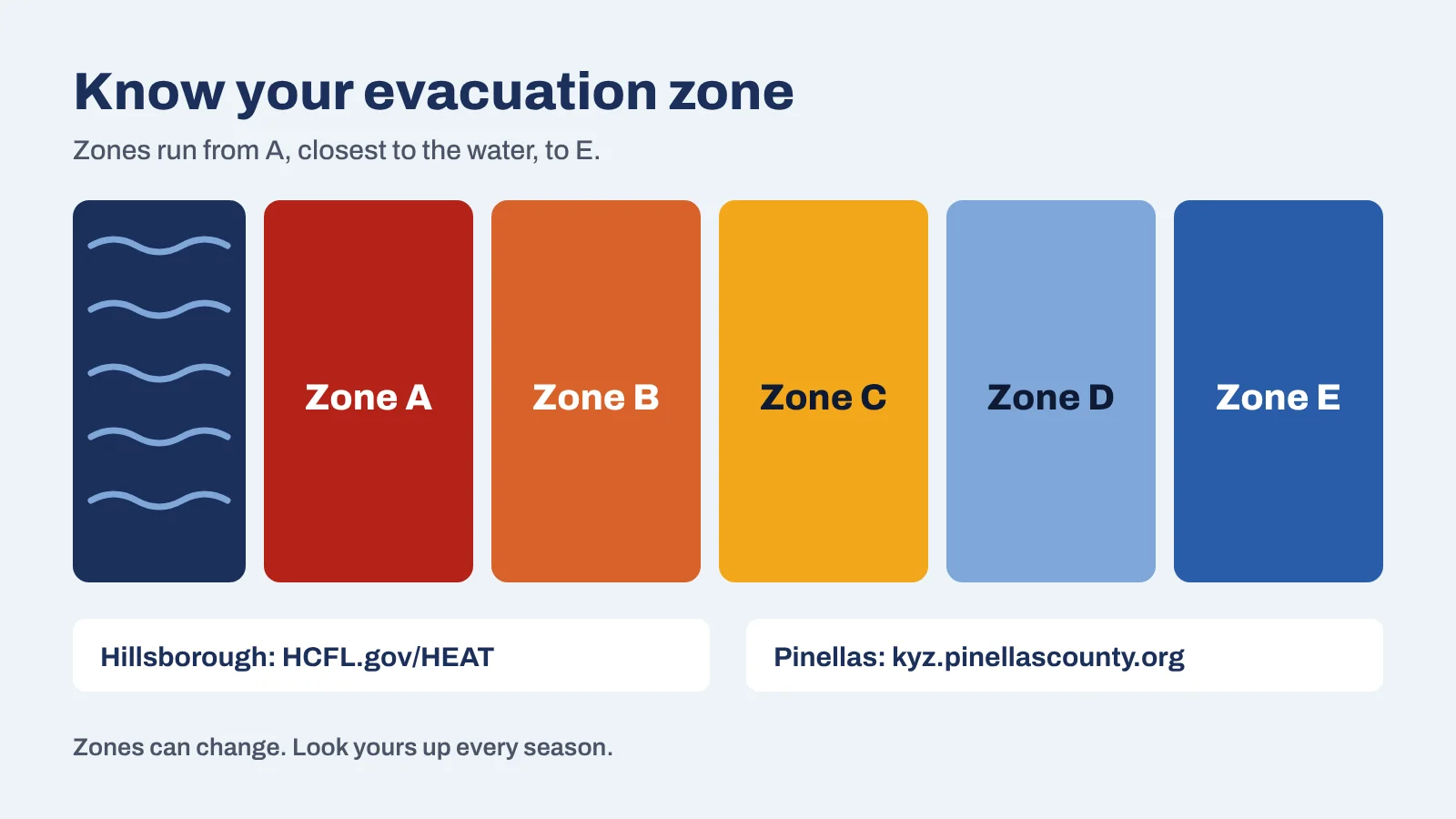
Your evacuation zone is based on storm surge risk, not wind. Look yours up every season because zones change.
- Hillsborough: look up your zone at HCFL.gov/HEAT. The county changed its zones for 2026 using updated NOAA storm surge data. Zone A grew in some areas, some homes moved from Zone D to Zone C, and some areas without a zone are now in Zone E. Manufactured and mobile homes are always in Zone A, even inland.
- Pinellas: use the Know Your Zone lookup. Enter your address to see your zone and nearby shelters.
If you're told to evacuate, Hillsborough County suggests going to a friend or family member's home outside the affected zones, or to the nearest shelter.
2. Sign up for emergency alerts
- Hillsborough: HCFL Alert
- Pinellas: Alert Pinellas. Pinellas Emergency Management can be reached at (727) 464-3800.
3. Build your kit
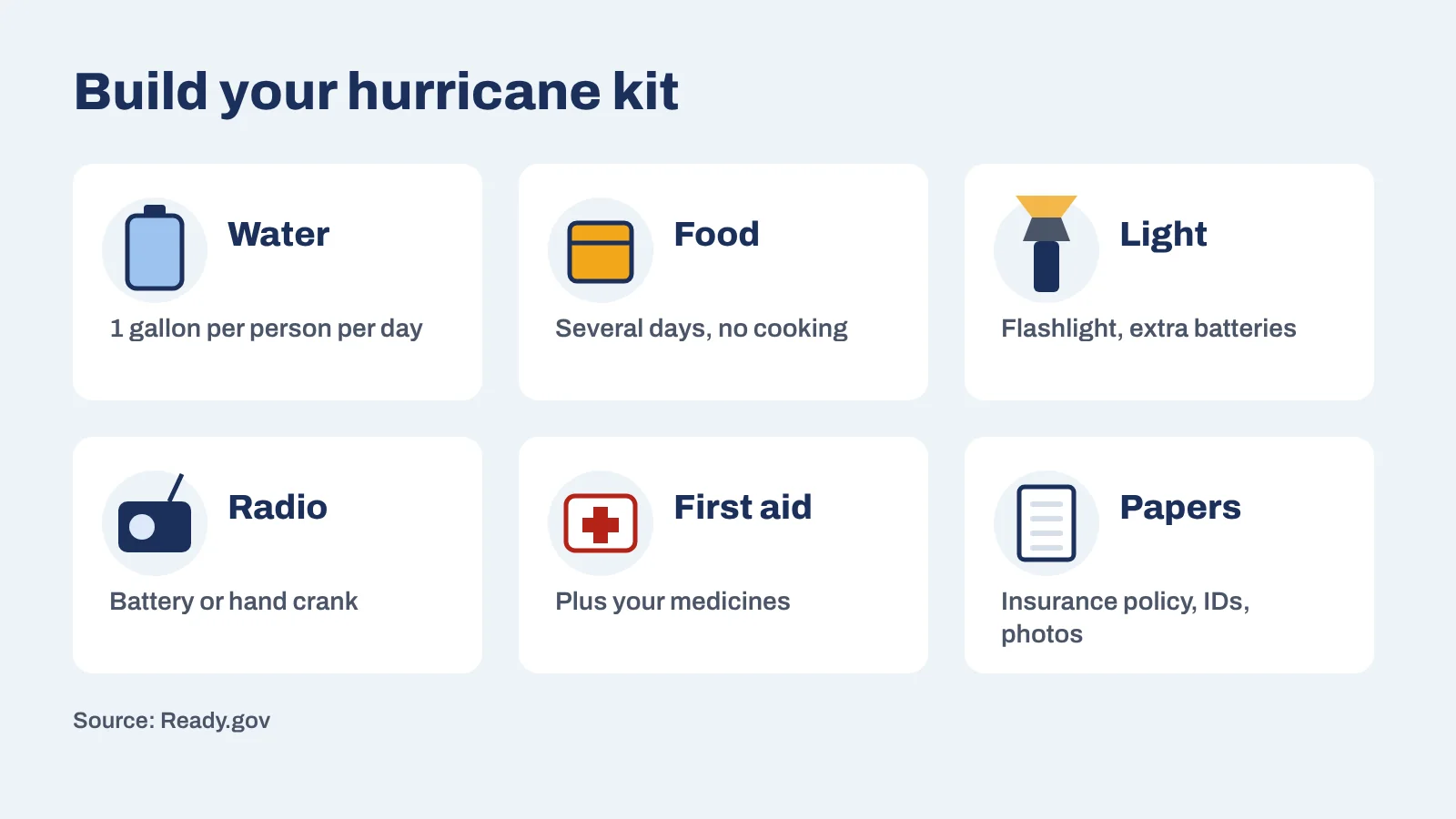
Ready.gov's basic kit includes:
- Water, 1 gallon per person per day for several days, for drinking and sanitation
- At least a several day supply of food that won't spoil, and a manual can opener
- A battery powered or hand crank radio, plus a NOAA weather radio with tone alert
- Flashlights and extra batteries
- A first aid kit
- Your phone, chargers and a backup battery
- Moist towelettes, garbage bags and plastic ties
- A wrench or pliers to turn off utilities
Add a few days of your prescription medicines, and put copies of your insurance policy and IDs in a waterproof bag.
4. Get your house ready
- Bring in or tie down patio furniture, grills and anything else that can become flying debris.
- Close shutters, or have them ready to go.
- Check your garage door. It's the biggest opening on most homes. Read more in Impact windows vs. hurricane shutters.
- Take a look at your roof and clear your gutters. PITCH Roofing has a full guide on preparing your roof for Florida's hurricane season.
5. Get your insurance paperwork in order
- Walk through your home and take photos or video of every room, your roof and the outside of your house. If you ever have to file a claim, before photos help.
- Know your hurricane deductible. It's often different from your regular deductible.
- Keep a copy of your policy and your agent's phone number somewhere you can reach without power.
- If you have a wind mitigation report, keep it with your policy. Not sure what that is? Read What is a wind mitigation inspection?
6. After the storm
Stay out of floodwater and away from downed lines. Document damage with photos before you clean up. And be careful who you hire. After big storms, out of town crews show up fast. PITCH Roofing wrote about the 7 lies scammy roofers will tell you, and their guide on what to do after Hurricane Helene still applies after any storm.
Fix the weak spots before next season
A kit gets you through the storm. A stronger roof, impact windows and impact doors help your house get through it too. If you live in Hillsborough or Pinellas County and your roof is more than 10 years old, or your windows or doors aren't impact rated, your home may qualify for Storm Safe Program, with no upfront costs in most cases. Check who qualifies.
Common questions
When is hurricane season in Florida?
Atlantic hurricane season runs from June 1 through November 30.
How do I find my evacuation zone?
In Hillsborough, go to HCFL.gov/HEAT and enter your address. In Pinellas, use the Know Your Zone lookup at kyz.pinellascounty.org.
How much water should I store for a hurricane?
Ready.gov recommends 1 gallon per person per day for several days, for drinking and sanitation.
Do mobile homes always have to evacuate?
In Hillsborough County, manufactured and mobile homes are always included in Zone A, even inland. Follow your county's evacuation orders.
Get your free hurricane safety assessment
Call or text "Safety" to (727) 687-3364, or see if your home qualifies.
Sources
- National Hurricane Center: Tropical Cyclone Report, Hurricane Helene
- National Hurricane Center: Tropical Cyclone Report, Hurricane Milton
- Hillsborough County: Evacuation zones expanded for the 2026 hurricane season
- Pinellas County: Find your evacuation zone
- Ready.gov: Build a kit
- PITCH Roofing: When is hurricane season in Florida?
- PITCH Roofing: How to prepare your roof for Florida's hurricane season