
Key takeaways
- Windows, doors and garage doors are the weak spots. Once one breaks, wind gets inside and pushes up on the roof.
- Impact windows are always protecting your home. Shutters only work if they're closed before the storm.
- Both can count as opening protection on your wind mitigation form if they're tested and approved.
- For insurance credit, your weakest opening counts. Citizens gives no opening protection discount for wood panels.
- Check any product's Florida approval number on the state's product approval site.
Plywood over the windows is the classic Florida storm move. There are better ways to protect your windows and doors, and depending on your home, the answer might be impact windows, shutters, or a mix of both. Here's how to think about it.
Why windows and doors matter so much
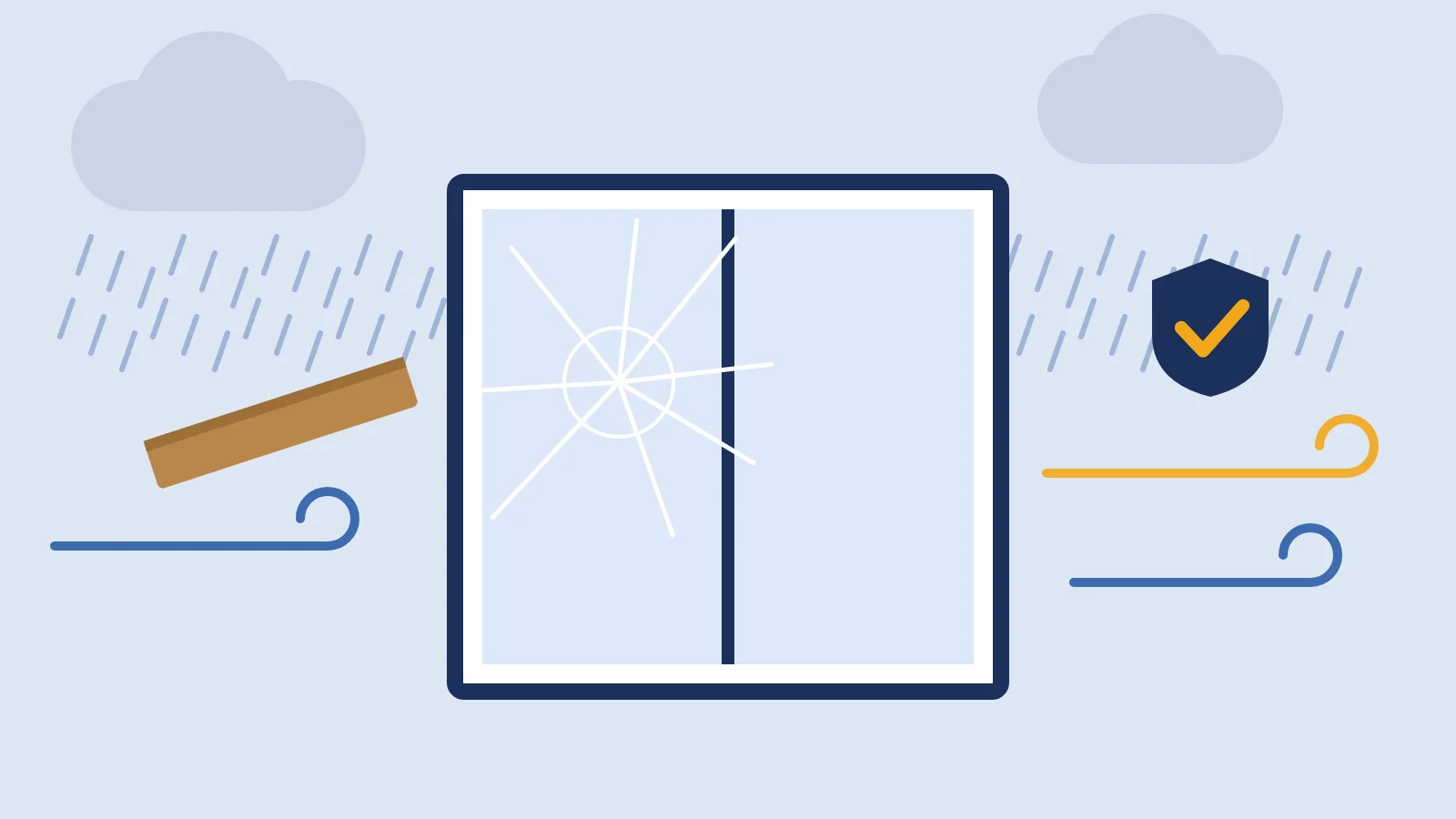
A window that breaks in a storm doesn't just let rain in. Wind rushes inside and pressurizes the house. That pressure pushes up on the roof from the inside while the wind outside is trying to lift it. The Federal Alliance for Safe Homes, or FLASH, describes it like an overinflated balloon. Once the roof goes, the rest of the house is wide open to wind and water.
What does "impact rated" mean?
Impact rated windows and doors are tested to stay in place when they're hit by flying debris and then pounded by hurricane winds. The glass can crack, but it's built to hold together and keep the opening closed.
In Florida, products sold for this use carry a Florida Product Approval number. You can look any product up on the state's product approval search by its FL number or manufacturer. Ask your installer for the numbers before you sign.
The windborne debris region
The Florida Building Code requires stronger opening protection in what it calls the windborne debris region. As the Florida Roofing and Sheet Metal Contractors Association explains, that's generally areas within 1 mile of the coast where the design wind speed is 130 mph or more, and any area where it's 140 mph or more. Your building department or contractor can tell you whether your address falls in it.
Impact windows vs. shutters
Impact windows
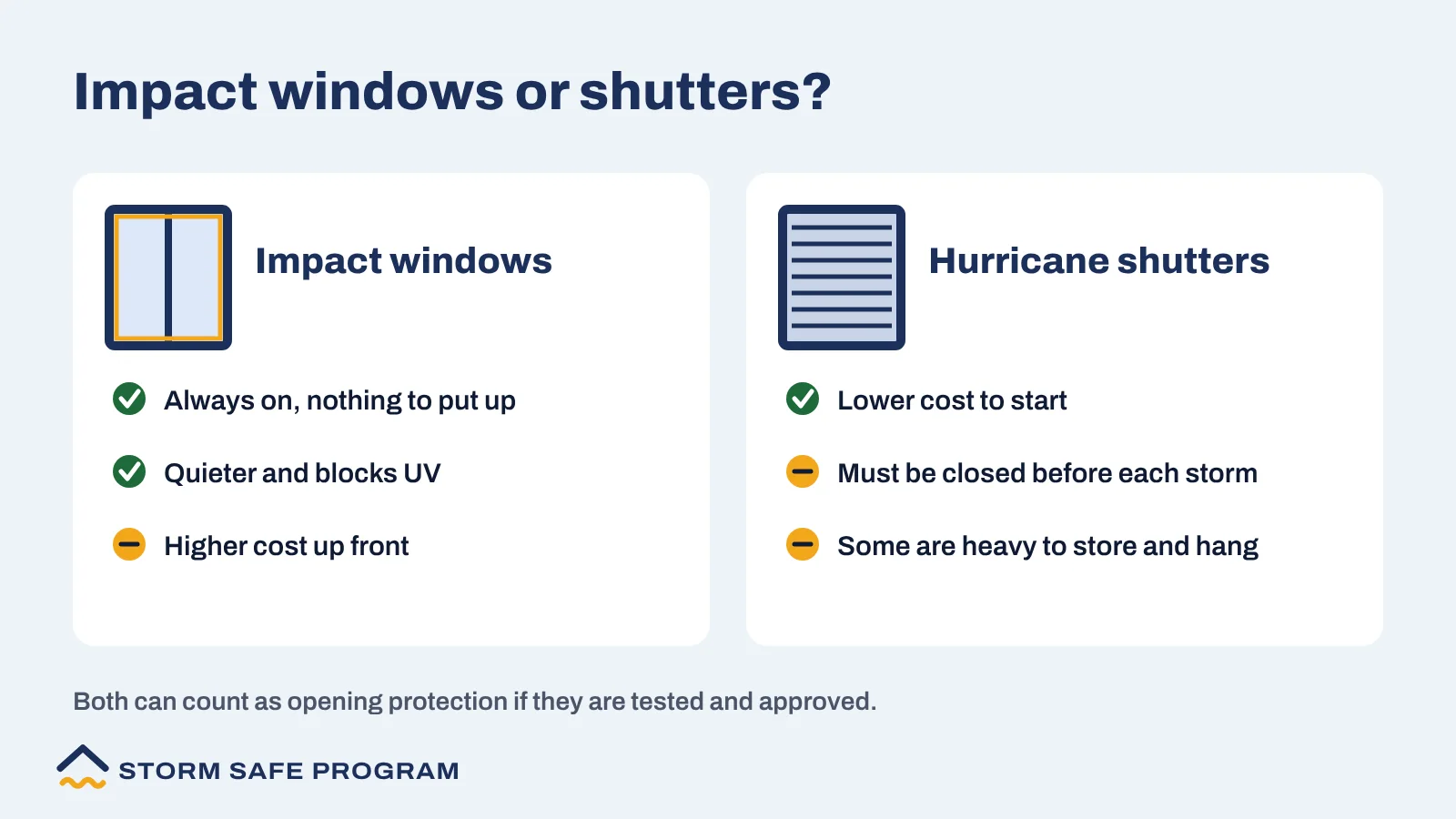
The big advantage is that there's nothing to do. They're protecting your home every day, including when a storm turns fast or you're out of town. You also get a quieter house and less UV coming through the glass. The downside is the upfront cost.
Shutters
The University of Florida's IFAS Extension breaks shutters down by type:
- Plywood: the cheapest option, but you're cutting, storing and hanging it yourself.
- Storm panels: steel or aluminum panels that are inexpensive and strong, but often heavy and hard to put up and store.
- Accordion: attached to the house and easy to close, but somewhat expensive and not the prettiest.
- Roll-down: attached, easy to use and can be motorized, but very expensive.
- Colonial or Bahama: attached and good looking, but strength varies a lot by design.
- Fabric screens: fairly inexpensive and easy to store, but newer, and debris can still break glass that touches the screen.
The same UF guide is blunt about two things: window film alone isn't full protection, and taping your windows doesn't protect them.
Don't forget the garage door
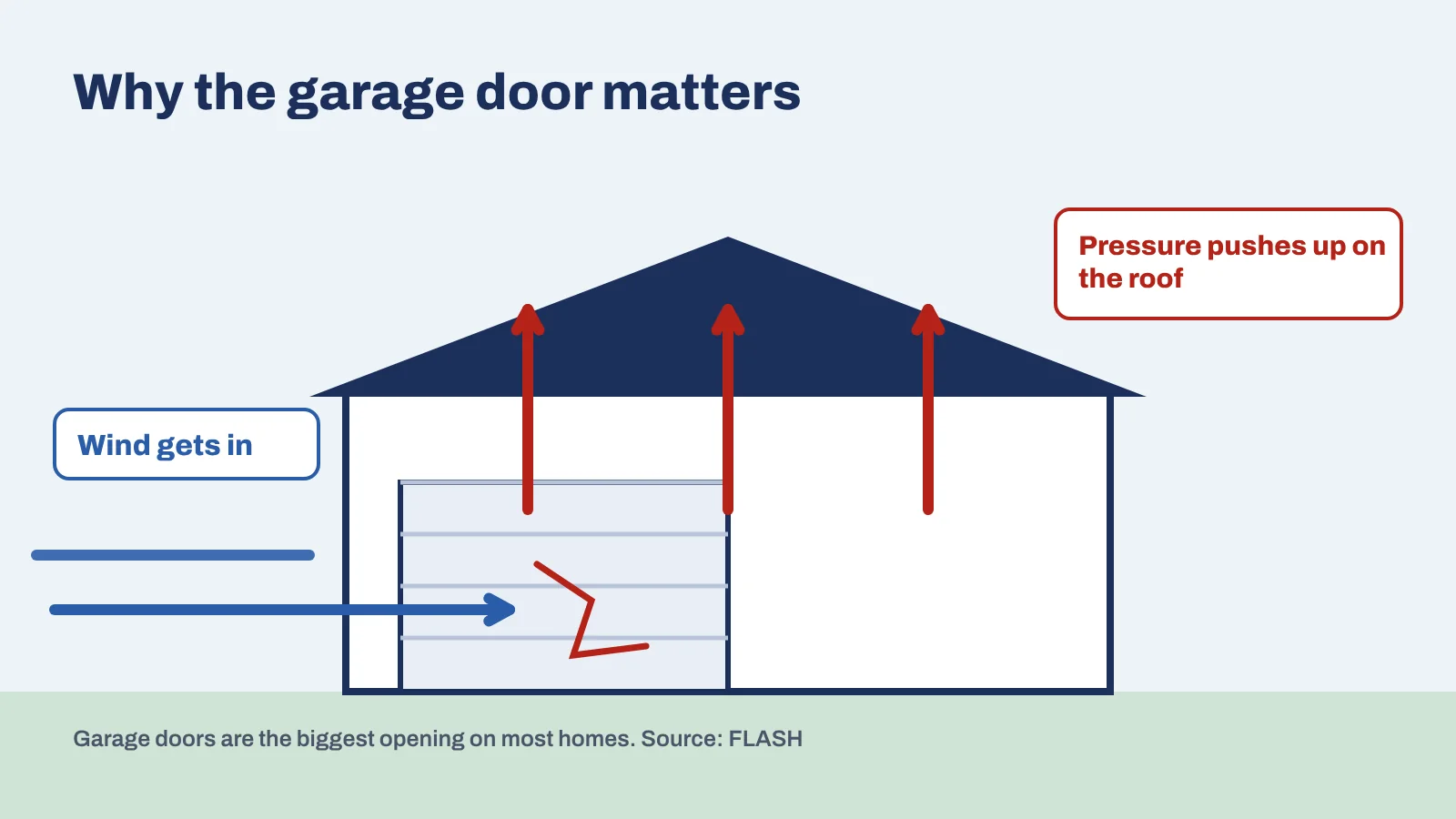
FLASH points out that garage doors cover the largest opening on most homes and are usually made of lightweight materials. If the door blows in, the garage pressurizes and pushes up on the roof. FLASH recommends doors with wind ratings of 150 mph or higher and tested impact features, and says single car doors generally perform better than double doors. Look for the rating label on your door.
What about my insurance?
Opening protection is one of the 7 parts of the wind mitigation form. Citizens Property Insurance gives credit based on the weakest protected opening. That means one unprotected window or an old garage door can hold back your discount. Citizens also gives no opening protection discount for wood panels. Learn more in What is a wind mitigation inspection?
Protect the roof too
Openings and the roof work together. A strong window won't save a roof that peels off at the edges. PITCH Roofing has good guides on preventing storm damage to your roof and the best roof for hurricanes.
How Storm Safe Program can help
If your windows or doors aren't impact rated, or your roof is more than 10 years old, and you live in Hillsborough or Pinellas County, your home may qualify to have them replaced, with no upfront costs in most cases. We cover impact windows, impact doors and wind resistant roofing, and we handle the permits, installation and city inspections.
Common questions
Do I still need shutters if I have impact windows?
No. Impact rated windows are the protection, so there's nothing to put up before a storm.
Is plywood good enough?
Plywood is the lowest cost option and better than nothing, but you have to cut, store and hang it, and Citizens gives no opening protection discount for wood panels.
Does taping windows help?
No. The University of Florida's IFAS Extension says taping windows doesn't protect them.
How can I tell if my windows are impact rated?
Look for a label on the frame or glass, and check the product's Florida Product Approval number. Your free hurricane safety assessment from Storm Safe Program also covers your windows and doors.
See if your home qualifies
Call or text "Safety" to (727) 687-3364, or fill out the form. The assessment is free, with no obligation.
Sources
- University of Florida IFAS Extension: Install Window Shutters (ABE375)
- FLASH: Install a high pressure rated garage door
- FRSA: Where is the windborne debris region?
- Florida Building Commission: Product approval search
- Citizens Property Insurance: Wind Loss Mitigation Guide (Rev. 04/26)
- PITCH Roofing: How to prevent storm damage to your roof